


Papillomas are the result of viral infection in the body.There are many types of pathogenic bacteria, including 32 species.
Photos with descriptions will help determine the classification of the papilloma, the extent and stage of the virus.Diagnosis and treatment are performed by a dermatologist or immunologist.It is necessary to monitor the condition of the tumor, as there is always a risk of tissue degeneration.
Papillomas Causes, Common Symptoms
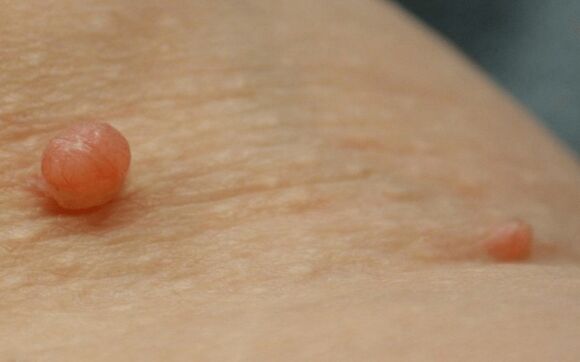
Papillomas are papillary growths that appear on the surface of the skin or mucous membranes.In most cases, tumors are benign.Malignant papilloma is rare.
Viruses are present in everyone's body; the appearance of warts occurs under the influence of negative factors, against which immunity decreases.
Causes of infection in the body are as follows:
- Having messy sex and not using special protective equipment;
- Metabolic disorders;
- Decreased body defenses;
- Bad habits (alcohol, smoking and drug abuse);
- Digestive system diseases;
- Failure to follow simple rules of personal hygiene.
During delivery, if the mother has the virus in her body, the baby is more likely to become infected.The risk of infection arises when a person is in a public place.The pathogens of viral infections also attach to surrounding objects, which can enter the body directly upon contact.
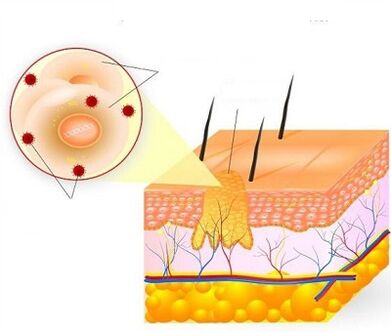
The development of the disease is accompanied by clear symptoms, mainly the appearance of tumors on the body (genital warts, verrucous papilloma).
In some cases, a person may also experience the following symptoms:
- The skin at the site of the wart becomes red;
- Itching occurs;
- dry, flaky skin;
- A tingling sensation occurs.
If the targeted area is the genitals, people may also worry about discomfort during exercise.In addition, the clinical manifestations of pathological conditions depend on the type of papilloma and concomitant diseases in the body.In any case, you need to contact a dermatologist and start treatment.
Types of Papilloma and Their Description
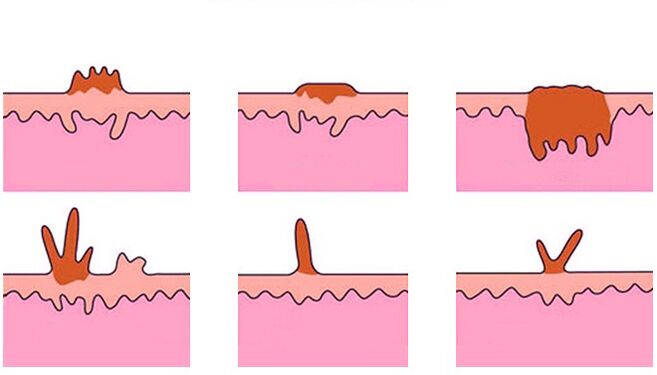
Types of human papillomas (photos with descriptions will help identify tumors):
| title | describe | |
| ordinary | Common warts are more common in younger people.Most often the affected area is the fingers.The causes are skin damage, fungal diseases or the negative effects of chemicals.Small papillomas are raised above the skin and are flesh-colored.If they are not damaged during the sanitation process, they do not pose a threat to human life. | |
| filamentous | Papillomas form on thin stalks in the armpits, breasts, neck, or face.The color of the tumor is flesh-colored.As the filamentous warts become damaged, slight bleeding may occur, but this will disappear quickly.Treatment using laser or cryodestruction. | |
| flat | Classic type of wart, characterized by a yellowish color.Appears on face, feet and body.The growths can become inflamed and cause itching due to the negative effects on them.Flat papillomas are usually removed surgically, especially if they are frequently damaged and cause discomfort. | |
| pointed | Warts that appear in the groin and genital area after unprotected sex.Apical papillomas are characterized by rapid growth, confluence, and a bumpy surface.If such a tumor is damaged, the risk of secondary infection increases.A dangerous wart that must be treated under medical supervision. | 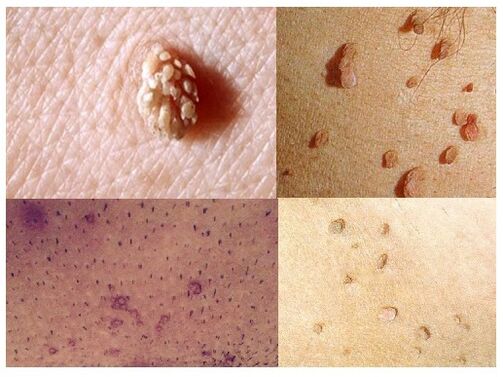 |
| Lewandowski-Lutz | A rare tumor found mainly in children.Positioning area: hands, feet.Papillomas are dark in color.Surgical treatment is necessary because this growth may degenerate into malignancy. | |
| soles of feet | Warts form on the feet.They can cause discomfort and sometimes painful sensations during exercise.In most cases, these warts appear on children and disappear on their own. | |
| juvenile | A rare type of papilloma diagnosed in young children.If the mother has warts in the genital area, infection with small organisms is more likely to occur during delivery.Juvenile papillomas arise on the mucosal surfaces of the oral cavity.They can also affect the vocal cords and interfere with the function of the respiratory system. | |
| Papillomatosis | A pathological condition in which warts dramatically increase and spread throughout the body.This is a common form of the disease, most commonly seen on the face, hands, or genital area.Damage to mucous membranes or internal organs poses a danger to human life. |
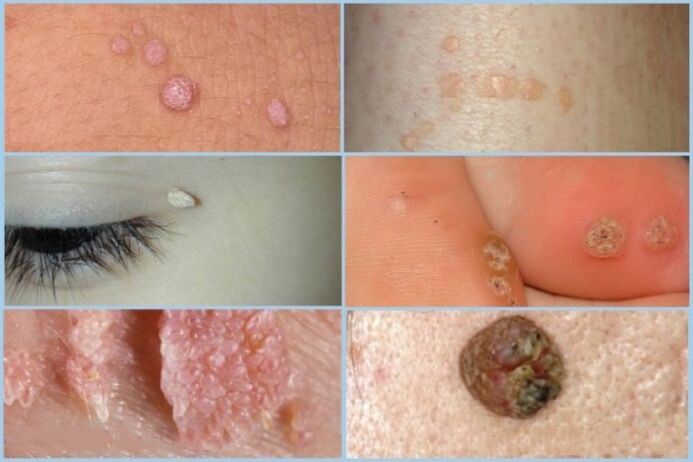
A dermatologist will help you make an accurate diagnosis; experts will choose the most effective treatments to prevent possible complications.It is important to differentiate between warts because many skin conditions are confused with warts (calluses).
What does the localized website say?
Types of papillomas (photos with descriptions will help you establish a preliminary diagnosis) are classified according to their location.
A dermatologist can probably determine the cause of a viral infection:
| title | describe |
| head | The main cause is a viral or bacterial infection in the body when dormant pathogens are activated. |
| Face | |
| eyelids | |
| Throat | Throat warts are more common in people who regularly strain their vocal cords (teachers, actors, broadcasters). |
| language | The first area affected by papillomavirus is the tongue, where small bumps with white particles appear. |
| neck | Triggers are stress, overexertion, colds and antibiotics. |
| mammary gland | Papillomas are caused by wearing underwear and frequent sweating. |
| Reproductive organs (external and internal) | The appearance of warts in the private parts indicates that the body is infected with sexually transmitted diseases, resulting in weakened immunity. |
| Body | Warts develop when the skin is frequently damaged or exposed to various irritants. |
In any case, it is necessary to determine the exact cause of papilloma formation.Only after diagnosis will the doctor prescribe treatment.
Non-dangerous and dangerous HPV
Most warts are harmless to humans and can be easily removed.However, some tumors are highly carcinogenic and can initiate malignant processes.
These types of papillomas are classified as follows:
| title | describe |
| low genome | Strains 1-5, 7, 10, 12, 14-15, 17, 19, 20-24, 26-29, 57.Characterized by the uneven formation of gray warts. |
| Low cancer risk group | Strains 6, 11, 42-44, 53-55.This growth is often associated with cervical genital warts. |
| Groups with average cancer risk | Strains 31, 33, 35, 52, and 58.Warts most commonly appear on the mucosal surfaces of the reproductive organs.Affected tissue is at risk of transformation.In the early stages of the disease, symptoms can be eliminated with the help of immune-stimulating drugs. |
| People at high risk of cancer | 16, 18, 36, 39, 45, 51, 56, 59 and 68 strains.Warts are particularly dangerous and indicate the presence of precancerous lesions that require immediate treatment. |
A dermatologist and a thorough diagnosis will help you make an accurate diagnosis.You should not self-medicate as this may harm your health.
What risks do women and men face?
In most cases, papillomas are not life-threatening.
However, under the influence of many negative factors, the risk of serious complications increases:
| title | describe | |
| cervical dysplasia | Precancerous lesions that change the structure of the cervical mucosa.The epithelium thickens and grows, and the cell layers mature, deteriorate and are rejected. | 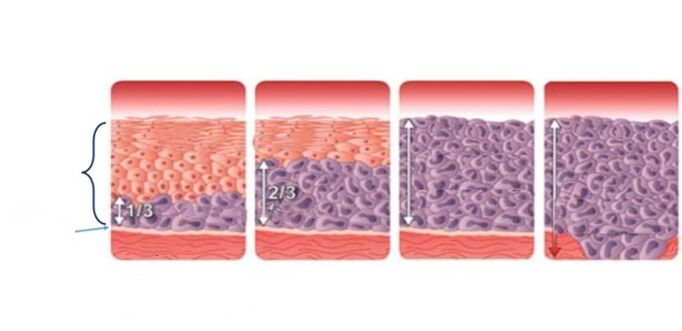 |
| cancer | A malignant disease affecting various internal organs.Tumors divide chaotically and grow rapidly into adjacent tissue. | |
| Impotence | A disease that causes erectile dysfunction and impotence. |
Many warts that appear on open areas of the body can cause severe emotional discomfort and a decrease in a person's self-esteem.But the main danger is the risk of tissue degeneration into malignancy.
What does the color of a papilloma mean?
Papillomas are the result of a viral infection (HPV).New growth comes in different types and colors and can be confirmed by photos and descriptions.If there is no discomfort or noticeable disturbance, there is no need to worry.If you experience changes in your vision, especially changes that affect color, you must go to the hospital.
| title | describe |
| red wart | Initially, papillomas may be this color.But in some cases, due to injury, after stress, or during hormonal medication, its flesh color can turn red. |
| black papilloma | The cause of growth and blackening may be bacterial infection in the human body, pathological effects or taking certain drugs.The same applies to lesions on the papilloma surface. |
| brown warts | The color of the warts may change after treatment with papilloma removal medications.Growths can also turn brown due to systemic damage. |
| white papilloma | Lighter colors indicate deterioration in growth nutrition.This happens when the body fights the virus on its own and defeats it.In this case, the wart will disappear on its own. |
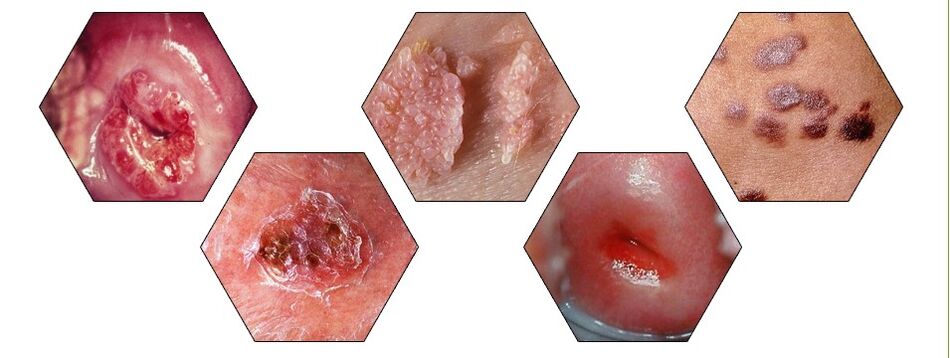
The color change in papillomas occurs as the immune system strengthens.In any case, a visit to a dermatologist is necessary to ensure there are no complications.
How to determine growth type?
The type of papilloma (photos with description will show what the growth looks like) will help determine a thorough examination.Doctors conduct instrument and laboratory tests for patients based on their condition and chief complaints.
| title | describe |
| colposcopy | A diagnostic method involving the use of acetic acid. |
| Polymerase chain reaction (PCR) | This test can help identify not only papillomavirus, but other diseases as well. |
| Biopsy | Experts remove a small piece of wart in the laboratory to determine the nature of the growth. |
Ultrasound testing (ultrasound) can help confirm or refute the development of papillomas in the body.
antiviral treatment
Complex treatment involves the use of special medications taken orally.Simply removing the papilloma is not enough; it is necessary to fight the virus that caused its appearance.
If the mouth is affected, it is recommended to rinse with an antibacterial agent.
Enhance immunity
There are different types of papillomas (photos with descriptions will help determine exactly the type of growth), but they all indicate a person's immune system is weak.Therefore, it is necessary to enhance the body's defense capabilities.
Many immune stimulants also have antiviral and anti-inflammatory properties.In the initial stages of the disease, you can additionally use topical medications (gels, ointments).
Hardware removal strata
Doctors may prescribe hardware wart removal if:
- Under the influence of negative factors (temperature changes, friction, increased humidity), papillomas are often damaged and inflamed;
- The tumor is growing actively;
- The function of the affected skin tissue is disrupted;
- The potential danger of developing warts, which have a high risk of degeneration;
- Pregnancy planning.
The following methods are used to remove papillomas:
| title | describe |
| laser | The most effective and safe way to fight warts and remove tumors from any part of the body.Under the influence of the laser, the warts evaporate, leaving bleeding vessels replaced by scabs.It will go away on its own after some time.Laser coagulation leaves no scars. |
| radio wave method | A radio knife is used during surgery.Minimal trauma is ensured by blood vessel coagulation. |
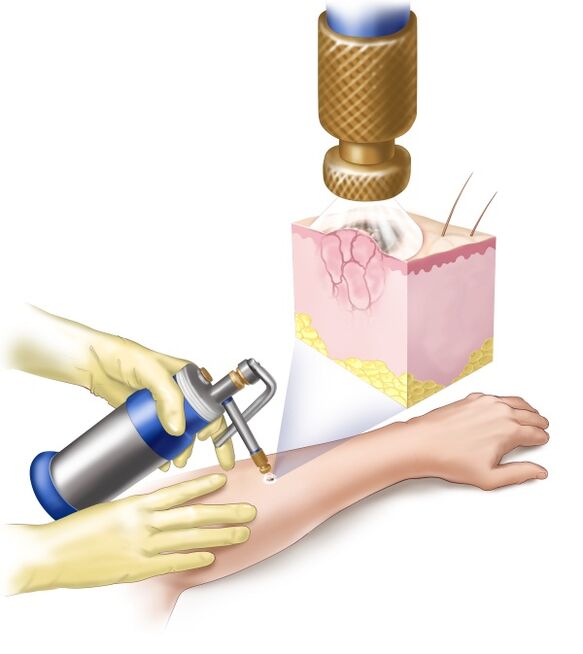
| Liquid nitrogen cryotherapy | Low temperature is used to freeze papillomas.Liquid nitrogen is applied with a special applicator, and the wart turns white and falls off.Mild inflammation and redness will occur in the treated area.After some time, a shell forms and the epithelialization process begins.The risk of scarring is minimal. |
| electrocoagulation | Electric current is used to remove warts.During electrocoagulation, the papilloma is removed and blood vessels are fused, thereby reducing the potential for bleeding. |
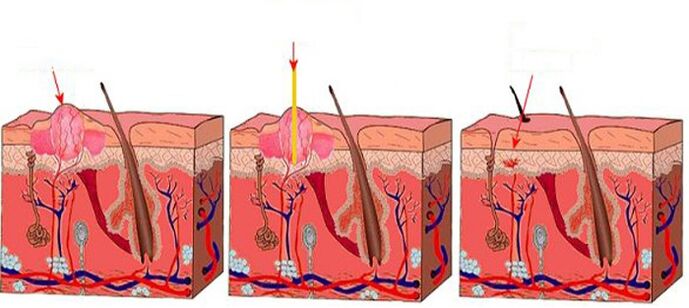
Comprehensive minimally invasive treatment with antiviral and immunostimulatory drugs is recommended for any type of papilloma.Even after successful tumor removal, the risk of recurrence remains.
folk recipes
Witch doctors and healers' recipes can be used to combat papilloma, but you should work with your doctor to choose a treatment.Many of the ingredients used may cause allergies or individual reactions.
The following methods can help you remove warts at home:
| title | cooking recipes | application |
| Celandine | The green seedlings must be chopped and the juice extracted. | Apply celandine juice to the wart, rub it evenly and seal it with a band-aid, which must also be lubricated beforehand.It is recommended to repeat the process every other day. |
| garlic | Peel and chop 2-3 heads of garlic.Add 2 tsp.Any cream.Mix all ingredients thoroughly. | The resulting pulp must be placed over the papilloma, covered with a bandage and covered with a bandage.After 2-3 hours, remove the compress and rinse the treatment area with clean, warm water.It is recommended to perform this procedure daily for 10 days. |
| Melissa | Pour boiling water over the leaves of the plant, leave for 30-40 minutes, and then strain. | The resulting decoction should be consumed in 3-5 doses throughout the day. |

Folk remedies can dry out the wart, burn it away and cut off its nutrients through the circulatory system.Oral medications further strengthen the immune system.
What are the dangers of self-medication?
Self-treatment at home can have more than just side effects.The potential for disease progression and degeneration of affected tissues is high.Therefore, it is important to develop a treatment plan with a dermatologist.
Vaccination
Papillomavirus can also be suppressed through vaccination.Gardasil is most commonly used for this purpose.In most cases, vaccination is given between the ages of 9 and 17 to prevent the body from becoming infected when sexual activity begins.
Vaccination is given 3 times throughout the year.The vaccine is highly effective as it creates long-lasting immunity to the virus in people 96% of the time.
Treatment of papillomas does not help completely eliminate the virus, but it can prevent the warts from recurring.Treatment depends on the type of tumor, and it's important to choose it with your dermatologist.
Photos with descriptions will allow you to initially establish a diagnosis and accept diagnostic methods to confirm or refute the assumptions of the expert.It is not recommended that you self-treat as this may cause serious complications.